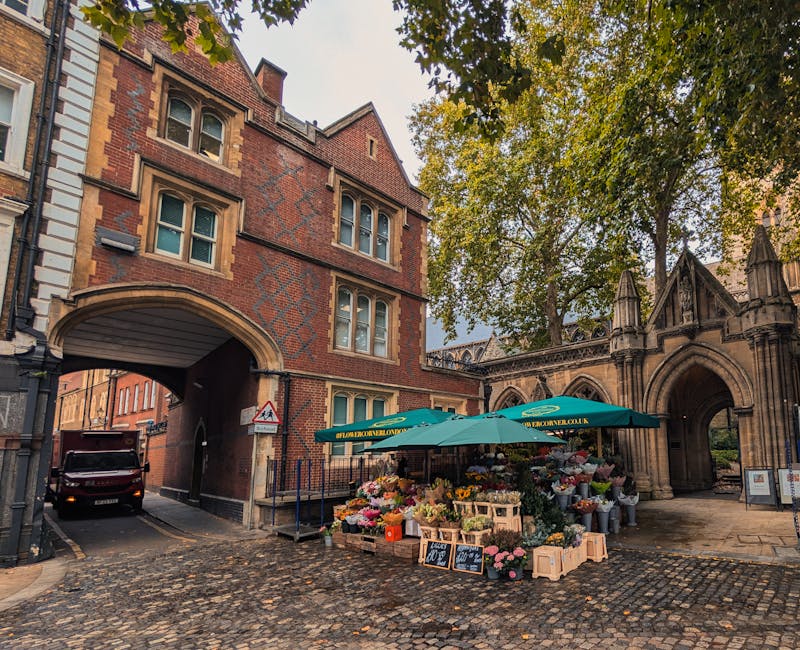
Commercial gardeners for St Lukes shops pubs and offices
First impressions are made fast. A customer walks past a shop frontage, a landlord unlocks a pub garden before lunch service, or an office team steps out for a break and notices whether the space feels cared for or forgotten. That is exactly where commercial gardeners for St Lukes shops pubs and offices make a difference. Not with flashy tricks, but with steady, practical upkeep that keeps outdoor areas looking sharp, working safely, and reflecting well on the business inside.
In a busy part of London, gardens and planted areas do not get much mercy. Footfall, weather, wind tunnels, debris, uneven light, awkward access, and the occasional "we'll deal with that next week" can turn a tidy frontage into a maintenance headache. This guide explains how commercial garden care works, what businesses actually need, where the value sits, and how to choose a service that feels dependable rather than patchy. If you want a greener, cleaner, more professional outdoor space, this will help you make a solid decision.
Why Commercial gardeners for St Lukes shops pubs and offices Matters
Outdoor space is part of the business, whether it is formally branded as such or not. A shop with a neat planter display feels more inviting than one with wilted bedding and weeds climbing the edges. A pub garden that is regularly maintained encourages people to stay longer and come back. An office courtyard can make a modest workplace feel calmer, cleaner and more professional. That all sounds simple, but the difference is very real.
Commercial gardening is not the same as casual domestic garden care. Businesses need reliability, consistent standards, and work that fits around opening hours, deliveries, staff movement and customers. In practice, that means scheduled maintenance, tidy finishing, and a plan for the bits that often get overlooked: litter-prone corners, slippery patios, hedges blocking signage, and planting that looks good in all seasons rather than just for a week in May.
There is also a reputational angle. If an outdoor area looks scruffy, people notice before they notice the menu, the products, or the reception desk. Harsh, but true. In St Lukes, where many businesses rely on passing trade, repeat visitors, and word of mouth, the exterior can quietly support the whole customer experience. A well-kept entrance says: we pay attention.
For businesses that want to improve their outdoor presentation without creating extra work for staff, commercial gardeners are often the simplest route. It is not just about mowing grass. It is about making the whole space feel intentional.
How Commercial gardeners for St Lukes shops pubs and offices Works
The process usually starts with a site visit or an initial discussion. A good contractor will want to understand how the space is used, what times are practical for visits, what problems keep coming back, and whether the focus is on appearance, safety, planting health, or all three. That first conversation matters more than people realise. It sets the tone and avoids the classic problem of paying for generic work that never quite solves the real issue.
From there, the gardener usually creates a maintenance plan. For a shopfront, that might include weed control, seasonal planting, pruning, debris removal and container upkeep. For pubs, there may be extra emphasis on seating areas, edging, patio cleaning, and hedges or shrubs that define outdoor drinking spaces. Offices often lean toward low-maintenance planting, tidy borders, lawn care, and robust greenery that can cope with less direct attention during the working week.
Some businesses need one-off work before launch, refurbishment, or a seasonal reset. Others benefit more from a regular contract. Regular visits are usually easier to budget for, and they stop small problems becoming annoying ones. A few weeks without attention is often all it takes for weeds, moss, and wayward growth to make a place look tired. You know how it goes.
Good commercial garden care also tends to be coordinated around access and disruption. Teams may work early morning, before opening, during quieter periods, or in stages so customers and staff are not disturbed. The best providers think like business people as much as gardeners. That is the bit many people overlook.
Key Benefits and Practical Advantages
There are obvious benefits, of course, but the stronger case is often in the day-to-day details. Here is where commercial garden maintenance pays for itself in practical terms.
- Better presentation: Clean edges, healthy planting and controlled growth make any business look more credible.
- Reduced staff burden: Front-of-house teams, managers, or office staff are not left trying to do gardening between proper jobs.
- Safer access: Clear paths, controlled moss, and tidy borders reduce trip and slip concerns.
- Seasonal resilience: Plants are selected and maintained to cope with local weather, shade, wind and winter stress.
- Lower long-term costs: Regular maintenance often prevents larger repair or replanting jobs later.
- Improved customer comfort: Outdoor seating areas, entrances and smoking zones feel more usable when they are neat and well planted.
- Better brand alignment: The exterior begins to match the tone of the business inside, which sounds small, but it matters.
There is another quieter benefit: consistency. A business garden does not need to be spectacular. It needs to be dependable. That steady, presentable look makes a stronger impression than a dramatic display that collapses after one dry spell or one windy weekend.
If your site includes hedges or overgrown shrubs that are starting to block light, sightlines or signs, a targeted service such as hedge trimming can quickly restore shape and visibility. For larger outdoor areas that need a broader reset, routine garden maintenance often gives the best value over time.
Who This Is For and When It Makes Sense
This kind of service suits more businesses than you might think. The usual candidates are obvious: independent shops, pubs with outdoor areas, office buildings with courtyards or frontages, and mixed-use premises that need a respectable shared exterior. But there are also plenty of less obvious cases.
For example, a small retail unit with just a few planters may still need professional help if staff have no time or confidence to keep them looking right. A pub might only need monthly support, but that support has to be reliable because customers notice outdoor mess immediately. An office may not need constant gardening, but it may need planting that looks good all year and does not become a maintenance burden for the facilities team.
It also makes sense when the site has any of these traits:
- limited internal staff time
- customer-facing outdoor areas
- high foot traffic and debris build-up
- shaded or awkward corners
- fast-growing hedges or climbers
- unsafe or uneven surfaces
- seasonal planting that keeps failing without proper care
Truth be told, the best time to hire commercial gardeners is often before the site looks bad. Once a business is already fighting weeds, moss, and tired planting at the same time, the job becomes more reactive and more stressful. Preventative care is calmer. Less drama. Everyone likes less drama.
Step-by-Step Guidance
If you are considering a commercial gardening arrangement, a clear process helps avoid guesswork. Here is a practical way to approach it.
- Walk the site properly. Look at entrances, visible planting, side access, waste areas, seating zones, and any places customers or staff actually use.
- List the priorities. Decide what matters most: presentation, safety, low maintenance, seasonal colour, privacy, shade, or all of the above.
- Separate "must fix" from "nice to improve." This keeps the first visit realistic and stops budgets leaking away into minor extras.
- Choose a maintenance rhythm. Weekly, fortnightly or monthly visits each suit different sites. Busy pubs and high-visibility shopfronts usually need more frequent attention than quiet office gardens.
- Agree the scope in plain English. Make sure everyone understands what is included: mowing, pruning, weed control, waste removal, hedge cutting, patio cleaning or planting refreshes.
- Plan around trading hours. The work should fit the business, not the other way round.
- Review after the first few visits. A good arrangement can be tightened up once both sides see how the space behaves in real life.
A small but important point: if a business has containers, raised beds or narrow frontages, the approach should be different from a larger ground-level garden. For that kind of setup, container gardening for compact spaces can be a useful way to think about plant choice and maintenance load.
Expert Tips for Better Results
In our experience, the best commercial outdoor spaces are the ones that stay simple enough to maintain. Fancy is fine, but only if someone is genuinely going to look after it. Otherwise it becomes expensive decoration, which is not what most businesses need.
Choose plants for resilience, not just looks. In a business setting, plants must tolerate variable light, occasional neglect, wind, and the occasional accidental kick from a delivery trolley. Tough, well-sited planting usually outperforms delicate choices.
Use structure to your advantage. Hedges, evergreens and strong edging help a space hold its shape through winter. If you want more privacy for a pub garden or office courtyard, ideas from privacy hedging can be surprisingly practical.
Do not ignore the awkward bits. Dark corners, shaded walls and narrow side returns are often where neglected growth starts. A bit of planning with evergreen shade climbers can make those spaces work harder without demanding loads of attention.
Keep waste removal part of the job. Trimmings, leaves and clippings left behind make even good work look unfinished. Composting can help in some settings, and if you are interested in a more circular approach, the guidance in organic waste and soil fertility is worth a look.
Think seasonally. A garden that looks good in July but miserable in February is not really finished. Winter structure, wind tolerance and sensible planting are what keep a business frontage feeling cared for all year.
And yes, a little restraint goes a long way. Not every office needs a miniature botanical wonderland. Sometimes the smartest design is the one that does not make the facilities manager sigh every Monday morning.
Common Mistakes to Avoid
Most problems with commercial garden care are not dramatic. They are small errors that stack up. That is why they are worth spelling out.
- Choosing on price alone: the cheapest quote can become expensive if the work is inconsistent or poorly scoped.
- Ignoring site use: a pub terrace, shop entrance and office courtyard need different maintenance priorities.
- Overplanting: too many species can create more upkeep than the site can realistically support.
- Forgetting access: if tools, waste removal and parking are difficult, the job will take longer and may disrupt trading.
- Skipping seasonal reviews: what worked in spring may not hold up after heat, rain or winter cold.
- Letting hedges and trees drift: once growth starts blocking light, signs or pathways, the problem becomes visible fast.
- Assuming one-off work is enough: many commercial spaces need regular touch-ups, not just a spring clean.
One very common mistake is failing to distinguish between appearance and function. A site can look neat yet still be hard to use. For example, a tidy patio with slippery algae or a pretty planting scheme that blocks access is not actually serving the business. If surfaces are part of the issue, pairing garden care with patio cleaning can be a sensible move.
Tools, Resources and Recommendations
A commercial gardener will normally bring the right tools for the job, but it helps to understand what good practice looks like. For most business sites, that includes reliable cutting tools, edging kit, weed removal equipment, safe access gear, and transport for green waste. On larger or more complex sites, specialist kit may be needed for hedge work, pruning, or tree-related tasks.
For businesses that are trying to keep outdoor spaces under control with a smaller footprint, the article on low-maintenance garden ideas is a useful reminder that good design can reduce future effort. Similarly, if you are looking for ways to make a narrow wall or service yard feel more alive, vertical gardening can be a practical space-saver.
For more plant-led inspiration, business owners often get useful ideas from simple, durable schemes rather than high-maintenance showpieces. Ground cover can be helpful where weeds keep breaking through; herb planting can work nicely in hospitality settings; and carefully chosen seasonal colour can lift a plain frontage without becoming a maintenance burden. There is no need to overcomplicate it.
If you are selecting a provider, ask whether they can cover broader outdoor needs too. A site that needs mowing, hedge work, tree management or boundary repairs often benefits from a team that can coordinate several tasks rather than sending out multiple contractors. Where relevant, you may also want to look at lawn mowing, lawn care, tree surgery and fencing as part of a broader site-maintenance plan.
Law, Compliance, Standards, or Best Practice
Commercial gardening work sits in a practical world of safety, access, responsibility and common sense. It is not usually heavily regulated in the way some trades are, but businesses still need to think carefully about safe working and duty of care, especially where staff, customers or visitors are nearby.
That means a few things in plain English:
- Risk assessments matter: especially for work at height, near entrances, around slippery surfaces, or where powered tools are used.
- Waste should be handled properly: green waste, arisings and debris should not be left to create hazards.
- Access needs planning: a contractor should be able to work without obstructing normal business operations more than necessary.
- Insurance is worth checking: businesses should feel comfortable that the contractor is appropriately covered for the work being carried out.
- Health and safety procedures should be clear: especially for public-facing sites with customers walking through or beside the work area.
It is also sensible to make sure the provider has straightforward terms, clear payment arrangements, and a complaints route if something goes wrong. That may sound formal, but it saves awkward conversations later. Pages such as insurance and safety, health and safety policy, terms and conditions, payment and security, complaints procedure and modern slavery statement help build that trust. If you need a general sense of how a provider handles quotes and pricing, pricing and quotes is the right place to start.
For accessibility-conscious businesses, it is worth thinking beyond plants and hedges. Walkways, visibility, and the ease of moving through the space all matter. A beautiful entrance is no good if it is awkward or unsafe to use.
Options, Methods, or Comparison Table
Businesses usually end up choosing between three main approaches. Each has its place, but they are not equal for every site.
| Approach | Best for | Strengths | Limitations |
|---|---|---|---|
| One-off tidy-up | Overgrown openings, seasonal resets, pre-event preparation | Fast visual improvement, useful for urgent fixes | Problems often return if follow-up care is not planned |
| Scheduled maintenance | Shops, pubs and offices needing steady presentation | Reliable appearance, easier budgeting, fewer surprises | Requires an ongoing commitment |
| Project-based improvement | Refits, redesigns, new outdoor seating areas, or a complete refresh | Can transform the feel of a site more dramatically | May need later maintenance support to preserve the result |
For many St Lukes businesses, a mix works best. A site may need a one-off clean-up, a modest planting redesign, and then regular maintenance to keep the result looking good. That is usually more realistic than trying to solve everything in one go.
If your outdoor space is used for customers, there is a good chance seating layout also matters. A neat bed beside a badly arranged terrace can still feel cramped. The ideas in thoughtful seating areas can help you think about how planting and furniture should work together, rather than fighting each other.
Case Study or Real-World Example
Here is a realistic example. A small pub in St Lukes has a front planter, a side return with awkward shade, and a rear seating area that gets heavy use in spring and summer. The owner notices that by midweek the entrance starts looking tired, weeds creep through the paving, and the side return becomes a dumping ground for leaves and stray growth. Nothing catastrophic. Just enough to lower the overall feel.
A commercial gardener steps in with a simple plan: remove the worst weeds, trim back overgrowth, refresh the containers with tougher seasonal planting, tidy the seating edges, and create a maintenance schedule that fits around opening times. The shaded side return is planted more intelligently so it looks intentional rather than neglected. The seating area gets a cleaner finish, and the entrance starts looking fresher without constant emergency fixes.
That sort of improvement rarely feels dramatic in the moment. But customers notice. Staff notice too. The owner stops worrying about the same little jobs every week. Over a few months, the site becomes easier to manage. Not perfect, not magazine-perfect, just properly looked after. And honestly, for a working business, that is often the win.
This is also where broader service knowledge helps. If a site has more than simple planting issues, it may benefit from coordinated support across gardening services, landscaping and decking services so the outdoor area feels coherent rather than patched together.
Practical Checklist
Use this before you book a service or review an existing one.
- Walk the site at the times it is busiest and note problem areas.
- List the parts of the outdoor space customers or staff actually see and use.
- Decide whether you need a one-off tidy-up or ongoing care.
- Check which tasks are included: pruning, mowing, weeding, waste removal, patio cleaning, planting, hedge work.
- Ask how the work will fit around trading hours or office access.
- Confirm that health and safety arrangements are clear.
- Make sure the provider can handle the level of maintenance your planting really needs.
- Choose planting that suits light, weather exposure and your available upkeep budget.
- Review the result after the first few visits and adjust the plan if needed.
- Keep a simple record of recurring issues so you are not solving the same problem repeatedly.
Quick takeaway: the best commercial garden service is the one that fits the business rhythm, controls risk, and keeps the site looking cared for without creating extra admin.
Get a free quote today and see how much you can save.
Conclusion
Commercial gardeners for St Lukes shops pubs and offices do more than tidy plants. They help shape how a business feels from the outside in. A well-kept frontage, sensible planting, safe access and reliable maintenance all add up to something customers and staff can feel, even if they would not always name it out loud.
The trick is not chasing perfection. It is choosing a practical standard you can keep. That might be regular upkeep, a smarter planting scheme, better hedge management, or a full refresh of a tired outdoor area. Small improvements, done properly, tend to stick.
If you are ready to make the exterior easier to manage and better to look at, start with the space you already have. Then build a plan that feels realistic, steady and calm. That is usually where the best results begin.
And when a visitor pauses at the entrance and thinks, "this place is looked after," well, that says more than a sign ever could.
Frequently Asked Questions
What do commercial gardeners for shops, pubs and offices actually do?
They maintain business-facing outdoor areas so they stay tidy, safe and presentable. That can include mowing, hedge cutting, pruning, weeding, planting, patio cleaning, waste removal and seasonal refreshes.
How often should a business garden be maintained?
It depends on the site. Busy shopfronts and pub gardens often need more frequent visits, while some office courtyards can work well with less regular but consistent care. The key is matching the schedule to how visible and used the space is.
Is a one-off tidy-up enough for a commercial site?
Sometimes, yes. But if the outdoor area keeps getting messy, overgrown or slippery, a one-off job will only hold for so long. Regular maintenance is usually better for businesses that want a dependable appearance.
What should I ask before hiring a commercial gardener?
Ask what is included, how often visits happen, how waste is removed, whether they can work around opening hours, and how safety is managed on a public-facing site. Clear answers usually tell you a lot.
Can commercial gardeners help with low-maintenance planting?
Absolutely. In fact, that is often one of the smartest things they can do. The right planting scheme can reduce watering, pruning and replanting, which saves time and keeps the site looking good for longer.
Do pubs need different garden care from offices?
Usually, yes. Pubs often need more attention around seating areas, customer paths and high-visibility planting. Offices may lean more toward neat, structured, low-maintenance spaces that support a calm professional feel.
What if my outdoor space is tiny or awkwardly shaped?
That is very common in London. Small spaces can still work well with the right planting, containers, vertical interest and careful maintenance. Compact sites often benefit from simpler designs rather than trying to cram too much in.
How do I know if a gardener is right for a business environment?
Look for someone who talks about reliability, scheduling, access, safety and maintenance planning, not just plant choice. Business sites need consistency, and the best providers understand that.
Can garden maintenance include patios and hard surfaces?
Yes, often it can. Many businesses find it useful to combine planting work with cleaning tasks for paved areas, especially where moss, algae or debris affects presentation and safety.
What are the biggest signs my commercial outdoor space needs attention?
Weeds appearing in visible places, hedges blocking light or signs, tired containers, slippery paving, leaf build-up, and planting that looks stressed or patchy. If the space starts feeling like a chore to walk past, it probably needs help.
Is commercial garden care worth it for a small business?
Often, yes. Even a small frontage or modest courtyard shapes how people read the business. A neat outdoor space can lift first impressions, reduce staff distraction and make the whole place feel more looked after.
How do I get started?
Start with a site review, note the priorities, and ask for a maintenance plan that fits your budget and opening hours. If you want to discuss the next step, the simplest route is to use the contact details provided by the business and request a site-specific quote.